It Started as an Egg
by Kimberlee Graves

Focus Story:
It Started as an Egg by Kimberlee Graves
Companion Story:
The Chick and the Duckling by Mirra Ginsburg
Companion Poem:
'Peck, Peck Peck' by Aileen Fisher
Day 1
Old Favorites: Reread charts/poems from previous stories
Prior Knowledge:
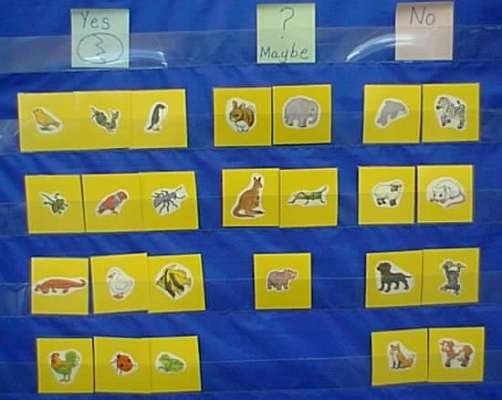
Ask students which animals they know come from eggs. After students have brainstormed animals that they know hatch from eggs, present a chart with three columns (yes, no, maybe) and pictures of a variety of animals. Let students take turns choosing an animal picture card and orally stating the animal's name. Let students decide if each animal definitely comes from an egg or definitely does not hatch form eggs. Let students share how they know this information. Place all other animal picture cards in the 'maybe' column on the chart.; Explain that all this week, we will read books to find out about which animals actually do hatch from eggs and which ones do not. Share that as we learn new information, the class will need to move some of the animals from the 'maybe' column to one of the other columns.
Focus Story:
Introduce title, author and illustrator of this week's focus story It Started as an Egg;Show the cover and talk about what type of egg is shown. What animal might hatch from this egg?; Take a picture walk letting students name and describe the baby and adult animal in each picture. What is the name of this animal? Is it called the same thing once it is an adult? How has the animal changed as it grew into an adult?; Read aloud for enjoyment.; Refer students attention back to the prediction chart. Are there any animals under the 'maybe' column that we now know hatch from an egg?
Day 2
Focus Story:
Refer to the prediction chart and the focus story in order to review with students what they learned about animals that hatch from eggs; Reread It Started as an Egg.
Companion Story:
Introduce title, author and illustrator; Explain that this story is about two new animal friends; See what students already know about chick and ducklings - What is a chick? What is a duckling? What is it's mother called? Do we know whether or not they hatch from eggs?; Begin a Venn diagram and list what students already know about a chick and a duckling; Take a picture walk of the companion story, letting students describe the actions of the chick and the duckling. Let students make predictions as to whether the chick will do the same thing as the duck in each situation. Why do they think that? Stop the picture walk when the chick hops into the water; Read aloud for enjoyment.; After reading, encourage students to think about other things they learned about the chick and the duckling. how are they alike? How are they different? (mothers, hatch from eggs, beaks, feet, coloring, number of legs, uses for their beak and feet, sounds make, feathers, tail, wings, ability to fly, type of bird, etc.)
Day 3
Focus Story:
Shared Reading - Reread It Started as an Egg, encouraging students to join in on the words they are familiar with; Brainstorm with students what the author might have wrote for a chick and a duckling; Use interactive writing to write about either the chick or the duckling and make additional pages. (For example, "It started as an egg. It hatched and it grew. Its web feet grew so it could swim. It started as an egg and it became a duck.")
Companion Story:
Review with students how the chick and the duckling are alike and different, reading the Venn diagram; Shared Reading - Reread The Chick and the Duckling.; Discussaspects of the story with students by asking a few of the following questions...
- How can we tell that the chick and the duckling are friends?
- What kind of things do they like to do together?
- What is the problem in the story?
- How did the duckling help his friend?
- What might the chick and duckling have learned by the end of the story?
- Do you think it is all right for friends to do and like different things sometimes? Why or why not?
- Share a time when you and a friend did different things.
Introduce the pocket chart story with pictures (duck only at this time) and words. Discuss with students what they see the duck doing in each of the pictures. Show students the pictures of what the chick is doing, but out of sequence. Ask students to place the pictures in order, alongside the corresponding pictures of the duckling; Read the story chart with students.
Companion Rhyme: Introduce the companion poem 'Peck, Peck, Peck' by Aileen Fisher and read aloud.
Peck, peck, peck
on the warm brown egg.
Out comes a neck.
Out comes a leg.
How does a chick
that's not been about
discover the trick
of how to get out?
Day 4
Focus Story: Shared Reading - Reread It Started as an Egg.
Companion Rhyme:
Reread the companion poem 'Peck, Peck, Peck' - echo reading; Change the name and picture of the animal from a 'chick' to another oviparous animal. Do this several times, letting students choose the animal. Reread together. (This idea is from Building Literacy With Interactive Charts by Schlosser and Phillips; Scholastic:1992.)
Companion Story:
Shared Reading - Reread The Chick and the Duckling using the pocket chart story and pictures; Have students mask letters such as d, e, m, t, s, etc. Also have them locate sight words such as the, am, I, etc.
Day 5
Companion Rhymes:
Reread the companion poem 'Peck, Peck, Peck'. Let students name the rhyming words; Reread - choral reading (half the class, every other line); As yesterday, change the name and picture of the animal from a 'chick' to another oviparous animal. Do this several times, letting students choose the animal. Reread together.
Focus Story:
Together, reread It Started as an Egg; Introduce the take home booklet in which there are pictures of animals that hatch from eggs. Students need to complete the booklet, by writing the missing letters of the names of the animals. Read together with students tracking the print in their individual booklet.
It started as an egg.
It hatched and it grew.
It became a __________
(Examples: hen, duck, butterfly, ant, spider, turtle, snake, frog, etc.)
Companion Story: Shared Reading - Reread The Chick and the Duckling using the pocket chart story and pictures.
Related Egg/Duck/Chick Read Aloud Stories and Poems
Focus Story: It Started as an Egg by Kimberlee Graves
Companion Story: The Chick and the Duckling by Mirra Ginsburg
Companion Poem: 'Peck, Peck Peck' by Aileen Fisher
Chickens Aren't the Only Ones by Ruth Heller
Ducks Don't Get Wet by Augusta Goldin
How and Why Animals Hatch from Eggs by Elaine Pascoe
The Chicken or the Egg? by Allan Fowler
The Egg (A First Discovery Book) by Galimard Jeunesse and Pascale Bourgoing
Egg! by A.J. Wood
Egg: A Photographic Story if Hatching by Robert Burton
Quack and Count by Keith Baker
A Duck so Small by Elizabeth Holstein
All My Little Ducklings by Monica Wellington
Five Little Ducks by Ian Beck
Five Little Ducks by Pamela Paparone
Have You Seen My Duckling? by Nancy Tafuri
Come Along Daisy by Jane Simmons
Daisy and the Egg by Jane Simmons
Daisy and the Monster by Jane Simmons
Make Way for Ducklings by Robert McCloskey
My Goose Betsy by Trudi Braun
Wow! It's Great Being a Duck by Joan Rankin
Little White Duck by Walt Whippo and Joan Paley
One Duck, Another Duck by Charlotte Pomerantz
Swim, Number Nine Duckling by Susan Akass
'Humpty Dumpty'
You may also wish to read Animals Born Alive and Well by Ruth Heller. We read this so we could move the animals out ofthe 'maybe' column on our egg chart (Day 1 above) into one of the other columns. Some students were certain, before sharing this book, that bunnies hatched from eggs =)
Possible Cross Curricular Connections
Art:
1) Create the Humpty Dumpty TLC Craft
2) Make a 'These Eggs Quack Me Up' and have students write what each animal inside the egg is saying/thinking (below)


3) Make ducks (See below. Make with or without umbrellas and boots!)

Printable Patterns for the Duck (above)- 3 pages in PDF format
4) Create hand chicks (below -a cute idea shared by Marilyn Conner)
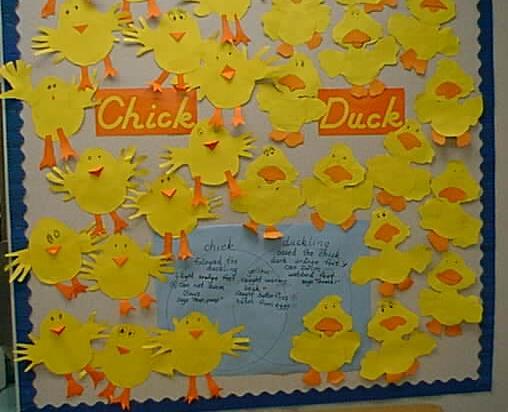
Printable Pattern for the Hand Chick (above) - 1 page in PDF format
Math:
1) Graph eggs (real graph with plastic eggs, pictorial graph with construction paper eggs, abstract graph to take home)
2) Compare lengths - Inside of 6 plastic eggs, place a different length of ribbon in each-compare
3) Feather Addition
Literacy:
1) Make an Egg booklet (cut/glue pictures that start with the same sound as 'egg')
2) Play 'Eggo' Bingo
3) Interactively write duck facts
4) Sight word focus – it, and, I , the, me
5) Word family focus –ing
6) Letter focus – e
7) Sequencing
8) ABC Sound Eggs
9) Word Work - CVC and Silent e Word Eggs
Science:
1) Set up 'Egg Stations' for exploring the space, weight, and area of an egg.
2) Study of oviparous animals
3) Hatch chicken or duckling eggs
4) Perform a feather experiment
5) Life Cycle of a Chicken Cut and Paste
Social Studies:
1) Focus on the themes of friendship; responsibility for taking care of animals/living things
Related Resources
Ducks
All About Ducks - great information about real ducks
Duck poems - from Can Teach
Eggs
The Chick Hatchery- see a chick hatch