Goodnight Moon
by Margaret Wise Brown

Focus Story: Goodnight Moon by Margaret Wise Brown
Companion Poem: Twinkle, Twinkle, Little Star' and 'Hey Diddle, Diddle'
Day 1
Old Favorites: Reread charts/poems from previous stories
Prior Knowledge:
Ask students to share with the class things that they do to get ready for bed (brush teeth, get a drink of water, put on pajamas, hug a family member, find their favorite stuffed animal, say goodnight, etc). Ask students to state who they make sure to say good night to before going to bed.
Focus Story:
Introduce title, author and illustrator; Show the cover and talk about the setting - Where is this story going to take place? What time of day might it be? Why do you think that?; Explain that in this story, a little bunny takes a long time going to bed and says goodnight to many things that he sees; Take a picture walk letting students describe and point out the details and objects in each picture that the bunny may say goodnight to. Have them use a complete sentence when sharing, such as "I see a red balloon."; Read aloud for enjoyment.
Companion Rhyme:
Ask students if they recognized part of a nursery rhyme in the storyGoodnight Moon; Introduce the companion nursery rhyme 'Hey, Diddle, Diddle'; Read the poem aloud; Have students to share the things in this poem that could never really happen(cat playing a fiddle, cow jumping over the moon, dog laughing, dish and spoon running); reread and let students enjoy the silliness of the rhyme.
Day 2
Companion Rhyme:
Reread the companion nursery rhyme 'Hey, Diddle, Diddle' - echo reading; Have students locate the rhyming words
Focus Story: Reread Goodnight Moon, pausing for some of the rhyming words
Predictable Chart:
Brainstorm with students things or people that they could say goodnight to at home. Then write "Goodnight _______." sentences. Start by writing Goodnight moon." (Bunny) Write each sentence on chart paper, writing their name at the end of the sentence. Reread each sentence tracking the print.
Day 3
Companion Rhyme:
Reread the companion rhyme'Hey, Diddle, Diddle'(choral reading); Then say a the name of a few of the objects or characters from the rhyme and ask students to state the sound and letter that the word begins or ends with.
Examples...
cat - What sound do you hear at the end of the word cat? What letter makes that sound?
fiddle - What sound do you hear at the beginning of the word 'fiddle'? What letter makes the /f/ sound?
Focus Story:
Shared Reading - Reread Goodnight Moon encouraging students to join in on the words they are familiar with; Let students take turns masking letters in the context of the story such as 'G', 'm', 'b', 'c', 'r'. Also, see if students can locate the sight word 'and' on various pages.; Discussaspects of the story with students by asking a few of the following questions.
- How does the little bunny know it is time to go to sleep? How do we know when it is time to get ready for bed?
- What happens at night?
- How is nighttime different from the daytime?
- What gives us daylight?
- What type of activities do you do during the day?
- What activities do you do at night?
- Do all people sleep during the night?
- What might the animals do?
- What do you see in the night sky?
Show the students picture cards depicting various tasks, objects, or events that they might see at night or during the day. Have students sort the pictures into two categories - night and day.
Companion Rhyme:
Introduce the second companion nursery rhyme 'Twinkle, Twinkle, Little Star' by stating that the poem is about things that we see at nighttime, but are present during the day. We justcan't see themduring the day because the light from the sun is so bright that it is impossible to see the light coming from them!; Read/sing this familiar rhyme with the students.
Day 4
Companion Rhyme:
Read/sing the companion rhyme 'Twinkle, Twinkle, Little Star' with the students ; Read an extended version of this poem in story format such as Twinkle, Twinkle Little Star by Iza Trapani. Read one time through for enjoyment; Read a second time, stopping after each page for students to orally state the two rhyming words that they heard.; Present rhyming pictures and have students match the pictures that rhyme. You may wish to use a few from this week's focus story such as bears/chairs, kittens/mittens, house/mouse, etc.
Focus Story:
Shared Reading - Reread Goodnight Moon encouraging students to join in on the words they are familiar with; Ask students how they think real bunnies sleep- Do they really sleep in beds?; Share a factual book showing and describing how animals sleep; Introduce the reproducible predictable story Who Is Sleeping (enlarged from 25 Emergent Reader Mini-Books by Maria Fleming; Scholastic:1997) It shows farm animals and how they sleep with predictable text such as "Horse is sleeping. Sleep tight, horse." Take a picture walk and ask students to name the animals and to state who they see sleeping. Have them slowly say the name of each animal, stressing the first letter. Ask students to point out which word on each page is the name of the animal. Stress that the text and the picture clues help us to read the story.; Read the story aloud.
Day 5
Companion Rhymes:
Reread both companion rhymes as a class; Reread one of the rhymes slowly, asking students to listen carefully for the individual words contained in the rhyme. Each time they hear a word, they are to high five with their partner. For example, if you read "Twinkle, twinkle, little star" students should high five four times, once for each word. (If this task is too easy for your students, ask them to give a high five for each syllable. So for "Twinkle, twinkle, little star", students would high five seven times.)
Focus Story:
Have studentsshare one thing that they liked about the story Goodnight Moon; Reread the reproducible predictable story Who Is Sleeping; Ask students which word in the reproducible story rhymes with goodnight; Explain to students that you have many more pictures of items that rhyme with 'goodnight' and 'tight'; Present the -ight/-ite word family pictures (see link below), letting students name each one. discuss meanings of any pictures that may be unfamiliar; Read the riddle cards (see link below) and let students figure out which word family picture rhymes when it completes the riddle and makes sense.
Predictable Chart:
Have each child reread his/her sentence, tracking the print. Cut apart one sentence and let students "Be the Words' and organize themselves into the correct order. Read together. Model how to place each word in the correct order at the top of the page and then to draw a picture of them saying goodnight to the object or person they stated in their sentence. Have students complete their sentence page as their small group writing activity today.
Related Nighttime Read Aloud Stories/Poems
Focus Story: Goodnight Moon by Margaret Wise Brown
Companion Poem: Twinkle, Twinkle, Little Star' and 'Hey Diddle, Diddle'
More Nursery Rhymes
Twinkle, Twinkle, Little Star by Iza Trapani
'Star Light, Star Bright'
'Wee Willie Winkie'
'Diddle, Diddle Dumpling'
Dreaming
Where the Wild Things Are by Maurice Sendak
Afraid at Night
Go Away, Big Green Monster! by Ed Emberly
Franklin in the Dark by Paulette Bourgeies
There's an Alligator under My Bed by Mercer Mayer
The Very Noisy Night by Diana Hendry
Can't You Sleep, Little Bear by Martin Wadell
Animals at Night
Sweet Dreams by Kimiko Kajikawa
Where Do Bears Sleep? by Barbara Shook Hazen
Time for Bed by Mem Fox
Goodnight Gorilla by Peggy Rathmann
Night Workers
Night City by Monica Wellington
Getting Ready for Bed
Froggy Goes to Bed by Jonathan London
Night Lights by Steven Schnur
The Stars are Waiting by Marjorie Dennis Murray
And if the Moon Could Talk by Kate Banks
So Many Bunnies: A Bedtime ABC and Counting Book by Rick Walton
Miscellaneous
The Napping House by Don and Audrey Wood
Sleep is for Everyone by Paul Showers
Dr. Seuss' Sleep Book by Dr. Seuss
Papa, Please Get the Moon for Me by Eric Carle
Many Moons by James Thurber
Laura's Star by Klaus Baumgart
Draw Me a Star by Eric Carle
Everything to Spend the Night: From A to Z by Ann Whitford Paul
Possible Cross Curricular Connections
Art:
1) Create 'Twinkle, Twinkle, Little Star' (in the Nursery Rhymes book) and/or 'Hey Diddle, Diddle' (in the More Nursery Rhymes book) both by TLC
2) Make a stars and moon mobile
3) Make nocturnal animal crafts such as the following...
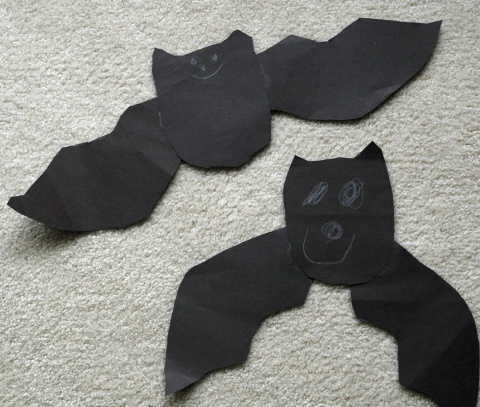
Bat Craft

Owl Puppet
Math:
1) Sort spoons, forks, and plates by object, color, size
2) Use spoons, plates, and forks to make patterns
3) Sequence stars by size
4) Use pattern blocks to create star shapes
5) Focus on time passage and sequence events from day to night
Literacy:
1) Word family focus '-ight' or '-ite'
2) Sight word focus- 'and'
3) Create a predictable chart for 'Goodnight ______.' or "Goodnight to the _______."
4) Rhyming words
Science:
1) Learn about nocturnal animals such as bats, owls, and raccoons
2) Learn about the sun, moon, and stars
3) Have students make a night sky journal in which they draw a picture of where they see the moon, what it looks like, any star constellations such as the Big Dipper, etc. and use kid writing to write about their picture
4) Find out about real bunnies (how they really sleep, what they eat, how they move, etc.)
Social Studies:
1) Learn about occupations that are done during the night and /or early morning (custodians, air traffic controllers, security/police officers, firemen, printers, bakers, etc.)
RelatedResources
Word Family Picture Cards - printable pictures for -ite and -ight
Word Family Riddle Cards - printable riddles to accompany the picture cards (above)
Hey Diddle Diddle Rhyme Sheet - printable from Webbing Into Literacy
Twinkle Twinkle Little Star - rebus rhyme from Enchanted Learning
Nocturnal Animal Poems
Itty Bitty Bat Book - free printable from Kidzone